


Online Bank vs Traditional Bank: Which One to Choose in 2026?
The short answer : it depends on what you actually do with your money
Online banks are now the better pick for most people whose banking life revolves around card payments, transfers, savings and travel. Traditional banks still hold an edge if you deposit cash regularly, want a dedicated advisor, or plan a complex mortgage with paperwork you’d rather not handle alone. In 2026, the choice is less about price and more about how you want to be supported when something goes wrong.
So before opening a fresh account, ask yourself one question : when was the last time you actually walked into a branch ? If you genuinely can’t remember, the rest of this article will probably push you in one direction. If your answer is “last month, and it was useful”, read on, because the other side has arguments too. For the broader admin side of switching banks, closing accounts, dealing with direct debits and chasing paperwork, the kind of practical shortcuts you’ll find on https://maviefacile.fr can save a real chunk of time once you’ve made your choice.
What online banks actually do well in 2026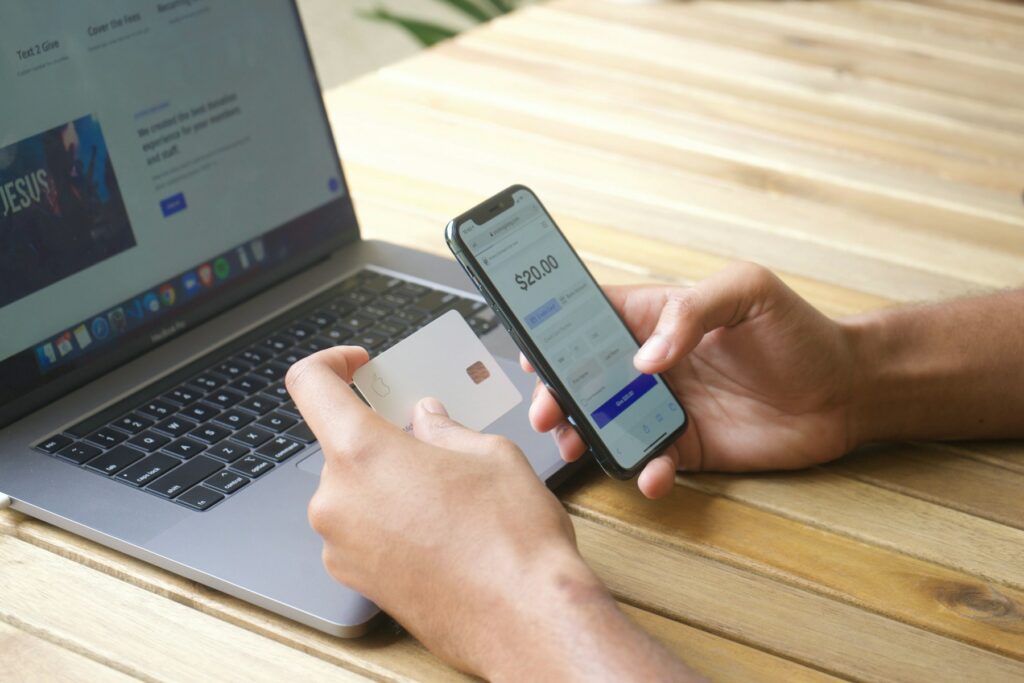
The original promise of online banking was simple : lower fees, faster apps, no queue. That promise still holds, and it has matured a lot.
Most online banks now offer free or near-free accounts as long as you meet basic conditions, usually a minimum monthly income or a few card transactions per month. The card itself, the account maintenance, and standard SEPA transfers cost nothing. Welcome bonuses for opening an account are still a thing, often in the range of one or two hundred euros, depending on the promo and the card tier you pick.
The apps are where the real shift happened. Instant notifications, in-app card freezing, virtual cards for online shopping, real-time budget categories, savings buckets you can name yourself, automated round-ups, shared expenses with a partner. Things a traditional banking app simply didn’t do five years ago, or did badly.
A few other points worth flagging :
- Foreign transactions: most online banks now offer good or excellent rates abroad, especially the neobank crowd like Revolut or N26. Some premium cards waive foreign card fees entirely.
- Customer service: chat-based, sometimes 24/7, often quicker than a branch appointment. But you’re on your own to explain the problem.
- Product range: most have caught up on savings accounts, life insurance, stock trading, and even mortgages, though the mortgage side is still a bit clunky compared to a face-to-face negotiation.
The catch ? You won’t deposit a wad of cash easily. Some online banks offer cash deposit through partner networks, but it’s rarely smooth, and often capped or charged.
What traditional banks still do better
It would be tempting to write off the high street bank as a fossil, but that would be lazy. Several things still genuinely play in their favour.
The first is cash handling. If you run a small business, work in a sector where cash still circulates, or simply prefer notes for whatever reason, a branch with a counter beats every app on the market. No online bank really competes here.
The second is complex situations. Buying a first home, restructuring a loan, dealing with an inheritance, opening a business account with mixed liabilities, navigating a divorce with shared finances. These moments often go faster when you can sit across a desk from someone who knows your file. A good advisor is not a marketing line, it’s a real asset, and online banks haven’t fully cracked that.
Third, the perception of safety. Bank deposits are guaranteed up to 100 000 euros per person per bank in France whether the bank is online or traditional, so the safety argument is partly emotional. But it counts. Older customers in particular often feel more confident with a name they’ve known for decades.
And finally, there’s local presence. Lost card abroad, urgent transfer authorisation, an exceptional withdrawal limit, a tricky document to certify. Branches still solve these problems, even if they’re closing one by one across the country.
Online bank vs traditional bank : the side-by-side
Here’s how the two stack up on the criteria that matter for most people in 2026.
| Criteria | Online bank | Traditional bank |
|---|---|---|
| Monthly fees | Free or low with conditions | Several euros per month, often more |
| Card included | Free or premium options | Tiered, often paid |
| Mobile app | Strong, feature-rich | Improving, but usually behind |
| Customer service | Chat, phone, sometimes 24/7 | Branch + phone, business hours |
| Dedicated advisor | Rare or shared | Standard, named |
| Cash deposit | Limited or paid | Easy at counter |
| Mortgage | Available, less hand-holding | Standard, negotiable face-to-face |
| Foreign transactions | Often free or low | Often charged |
| Welcome bonus | Yes, frequent | Rare |
| Joint account | Available almost everywhere | Standard |
Which bank fits which profile ?
Generic answers help no one, so here’s a more practical sorting.
Salaried employee, digital habits, no special needs
Online bank, almost without question. Fees drop, the app is better, and the welcome bonus covers a few months of small extras. Boursorama, Fortuneo, Monabanq and Hello Bank all fit, depending on the conditions you can meet.
Frequent traveller or expat
Online bank, with a preference for the neobank end of the spectrum (Revolut, N26, Wise for transfers) if foreign currencies are a regular thing. Watch out for ATM withdrawal limits abroad, which differ from one provider to another.
Buying a first home
Mixed answer. A traditional bank, especially the one where your salary is already paid, can be a decent option because they know your file. But shopping around online can yield better rates. The smart move is to compare, not to assume.
Small business owner, cash-heavy activity
Traditional bank for the cash, possibly with an online account on the side for the cleaner accounting tools. Some neobanks now do business accounts well (Qonto, Shine), but cash remains the deciding factor.
Older user uncomfortable with apps
Traditional bank, no debate. Pushing a parent or grandparent into a 100% mobile bank to save 60 euros a year usually backfires the first time something breaks.
Young adult, first account
Online bank for the price, or a youth offer in a traditional bank for the advisor relationship. Both work. The deciding factor is often whether the parent already banks somewhere and prefers the simplicity of one roof.
Can you have both ?
Yes, and a lot of people now do. Keeping a traditional bank for the mortgage, the safety net and the advisor, while running daily life through an online bank, is probably the single most common setup in 2026 among people in their thirties and forties.
The trick is to avoid paying fees on the unused traditional account. Either keep it at a minimum tier, or move to a low-cost option in the same group. Many traditional banks now offer a stripped-down online-style account precisely to keep customers who would otherwise leave.
What to check before switching
A few practical points often skipped in glossy comparisons :
- Income condition: most “free” online accounts require a minimum monthly deposit. Check the number, and check whether it’s net or gross.
- Bank mobility service: legally, your new bank should handle the transfer of direct debits and standing orders for free. Use it, don’t try to do it manually.
- Account closing fees: in France, closing a current account is free, but some products attached to it (like a stock account) can carry transfer fees.
- Deposit guarantee: confirm the bank is covered by the French deposit guarantee scheme, the FGDR, up to 100 000 euros per person per bank.
- Real customer reviews: not Trustpilot averages, but recent app store reviews. They tell you a lot about current service quality.
So, online or traditional in 2026?
For most everyday users, an online bank covers the job better and cheaper. For complex needs, cash habits or a strong preference for a real advisor, a traditional bank remains useful. The smartest move is rarely “all in” on one side, it’s a clear-eyed look at what you actually do with money each month, and a setup that matches it.
The right question isn’t which bank is best. It’s which bank is best for you, in 2026, given how you live. And the answer might be a mix.